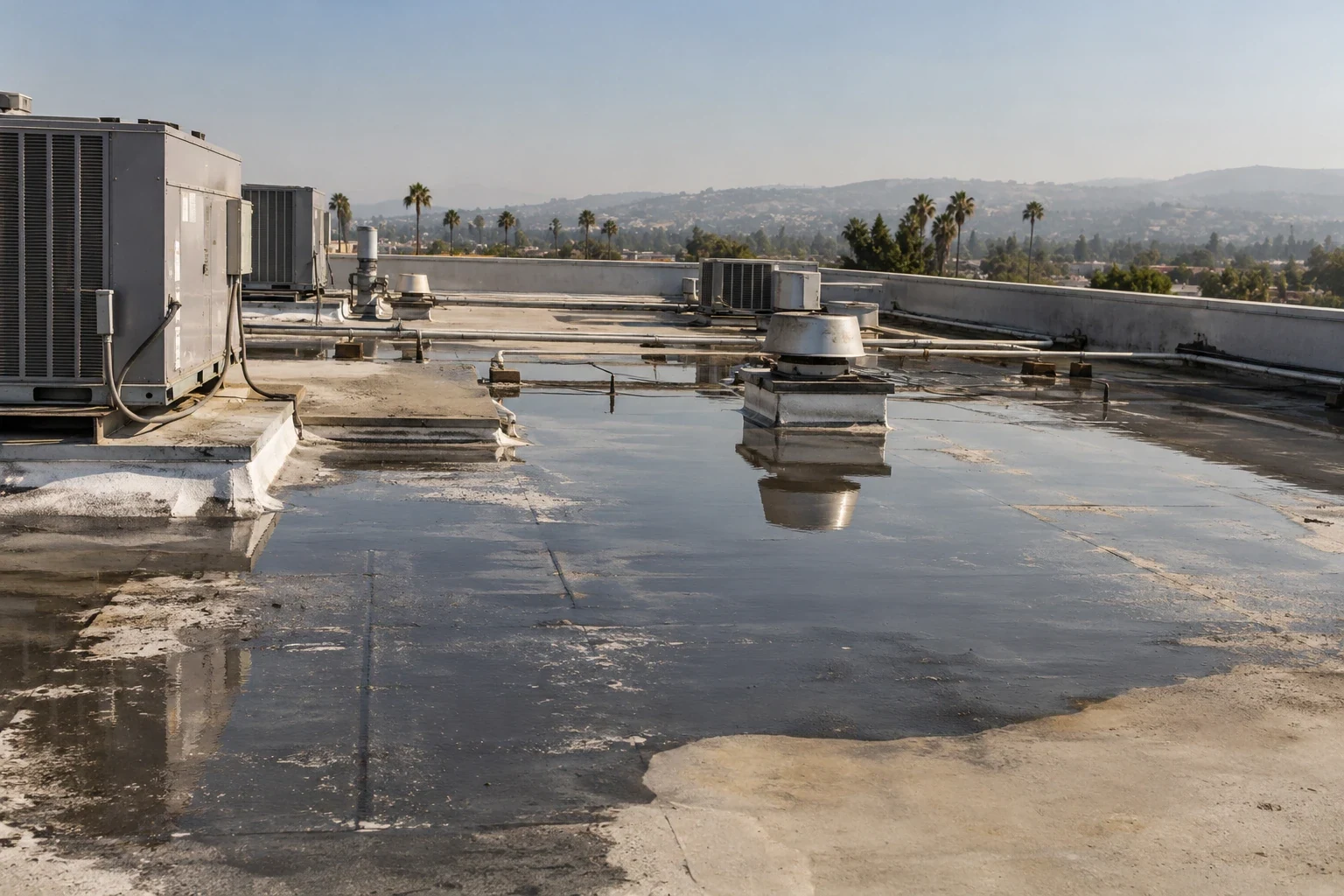
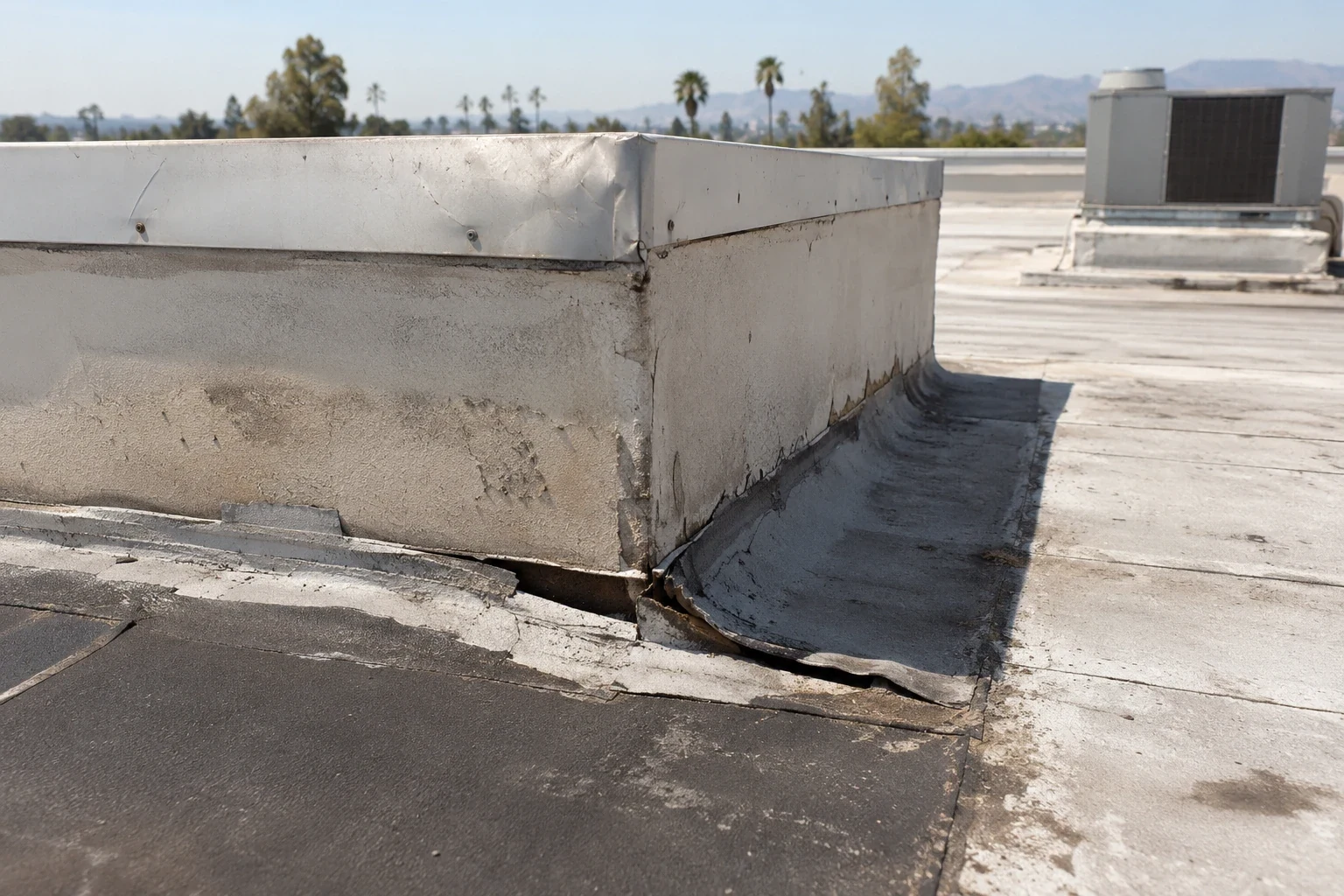
What should establish the proposed ponding correction?
Use actual surface observations, outlet findings and geometry relevant to the area. Distinguish cleaning from damaged connection or design work. Supporting discharge and structural questions need appropriate review before a changed slope or outlet is accepted.
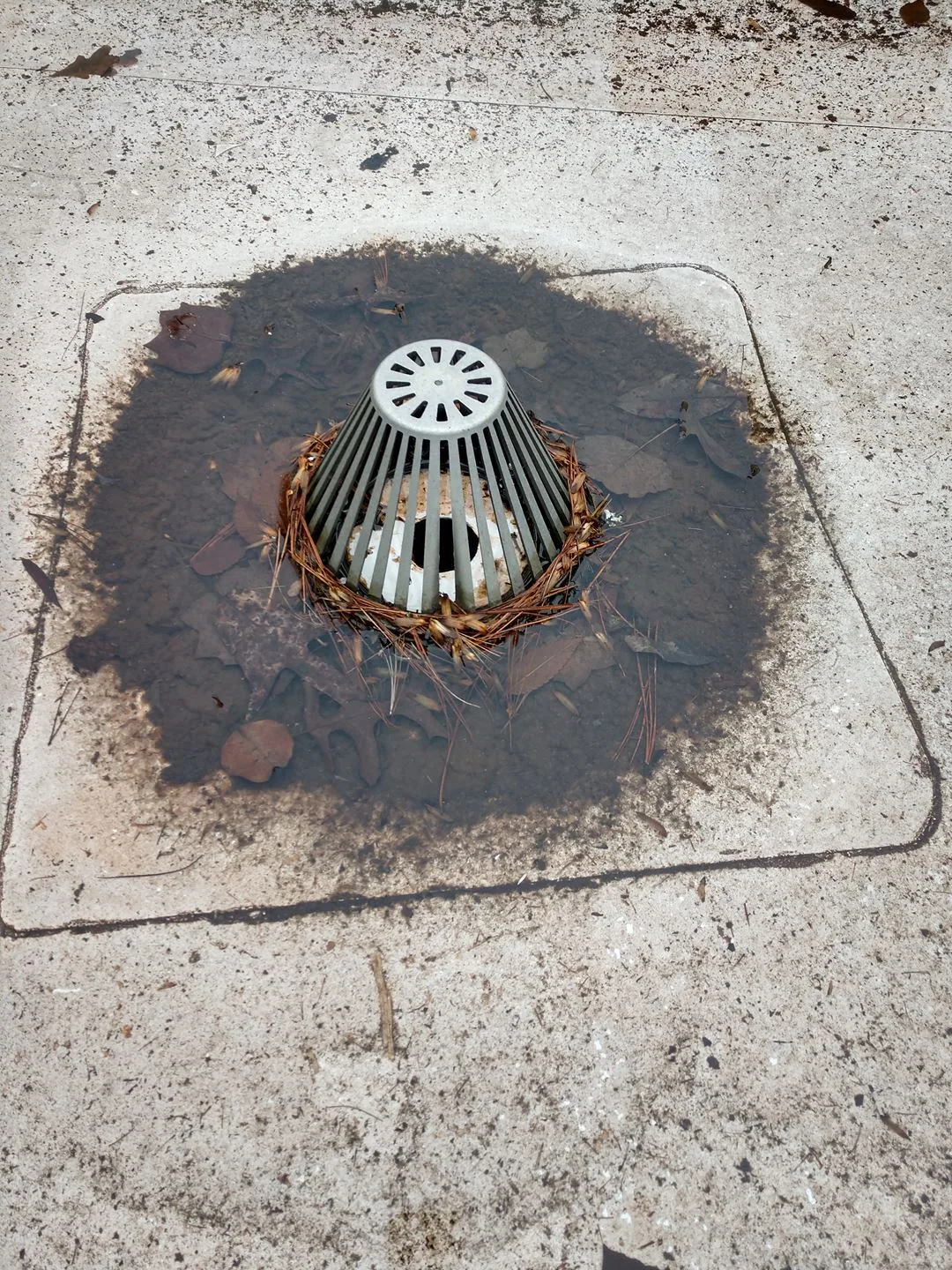
Does an open inlet prove the whole drainage route is clear?
Inspect the accessible connection and identify downstream service review where required. Record debris clearing separately from construction corrected. The responsible parties should retain any unexamined discharge question before treating the task as complete.
How should new insulation affect the roof detail review?
Assess the proposed height and slope with outlets, curbs and adjoining connections. Include support and applicable assembly decisions. The selected geometry needs a complete construction method and related trade responsibilities, not only a field-area material quantity.
Can a water report establish the concealed repair extent?
A reported or visible wet position guides examination. Suitable investigation must establish concealed condition relevant to the option, with thermal indications interpreted and appropriately confirmed. Local findings need sufficient coverage before supporting a wider construction quantity.
What should remain after drainage-area work?
Keep accepted details, installed materials, completion photographs and relevant service records at the work position. Identify downstream or supporting tasks still pending. The facility manager needs the actual outlet arrangement and next review for later maintenance or alterations.