How many times can a Fremont roof be recovered before it has to be torn off?
Evaluate the existing covering count together with the current project's applicable provisions and assembly condition. Samples and records may identify layers, but they do not alone settle every recover requirement. Have the design and permit review address the actual scope before treating another covering as an available option.
Will a recover trap moisture that is already in the insulation?
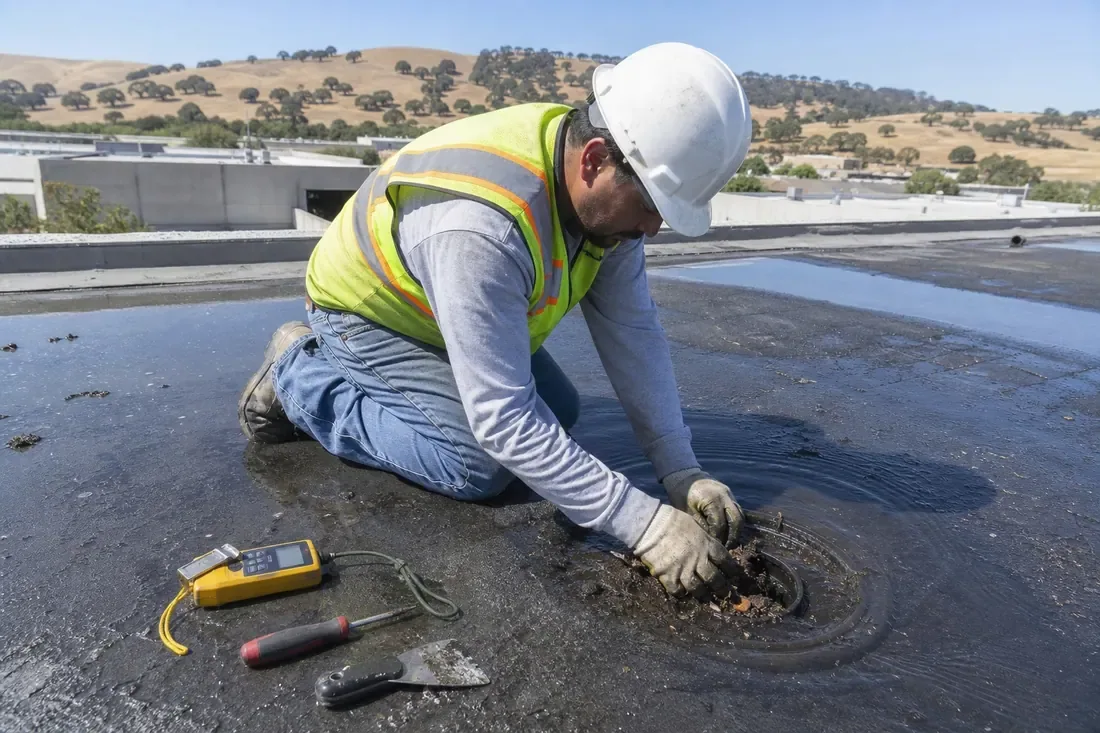
Retaining moisture-affected materials can undermine a proposed assembly. Investigate suspected areas and determine the appropriate removal and repair scope from supported findings and system requirements. A vent detail does not generally replace that evaluation or make unsuitable retained layers acceptable.
What does the overlay save on a hospital campus or other building that cannot stop operations?
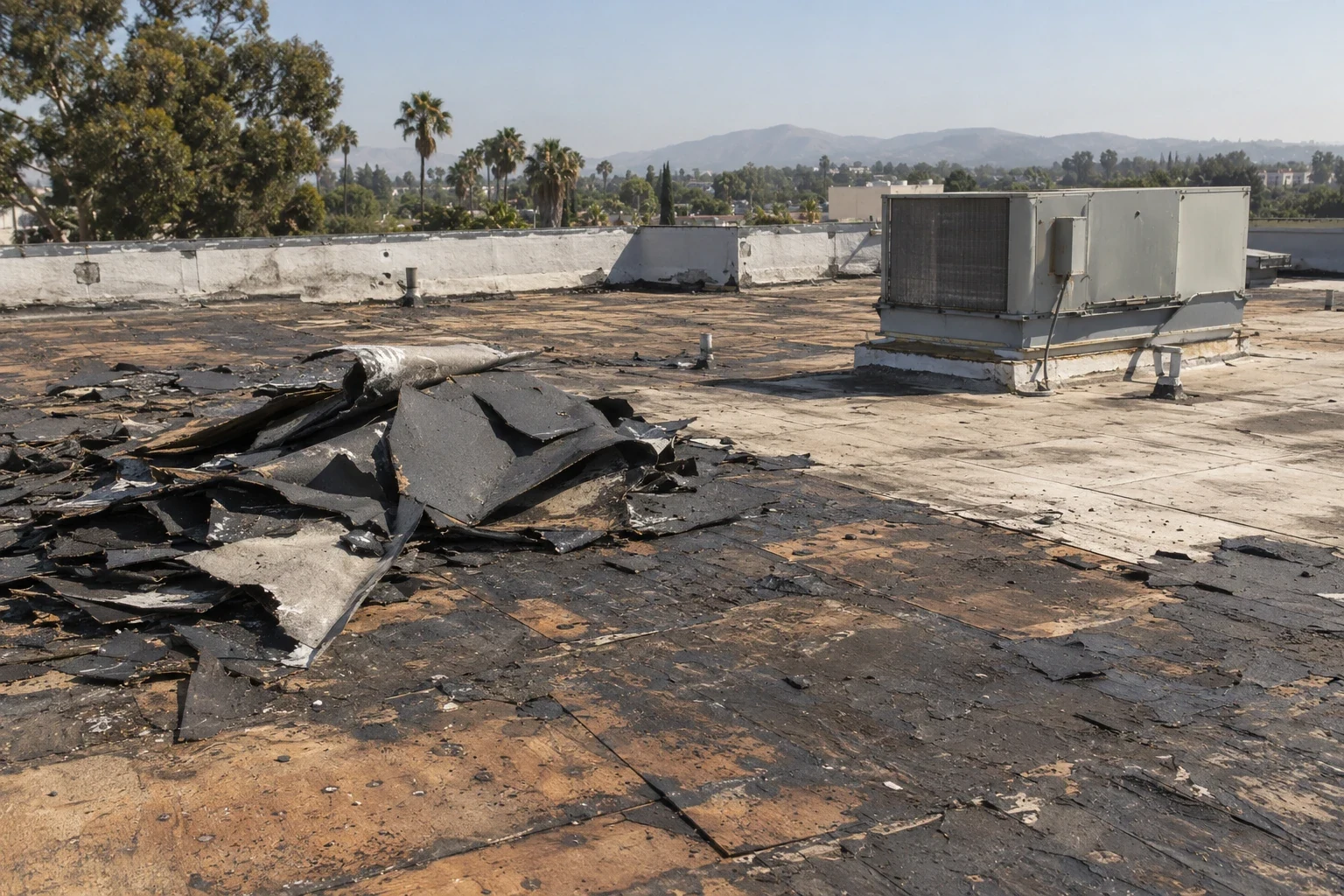
Compare the actual demolition, localized openings and equipment work under each option. An occupied facility still needs project-specific dust, ventilation, access and interruption arrangements. Where clinical or other sensitive operations are involved, the operator's requirements should shape the construction sequence and protection measures.
Does an overlay change the roof covering classification Fremont asks us to certify?
Review the classification of the proposed assembly and the property's applicable requirements. Fremont's certification provision applies within its adopted wildland-urban interface scope, with project-specific exceptions requiring review. Retained layers and cumulative work history can matter to that assessment.
Is a recover cheaper over the life of the roof, or only on day one?
Price both options from their defined scopes and unresolved conditions. Preparation, local removals, interface modifications and future planning needs can change the comparison. Evaluate the owner's objectives with the investigation findings rather than assuming an overlay has a fixed savings or service-life advantage.