Should every visible defect be listed as storm damage?
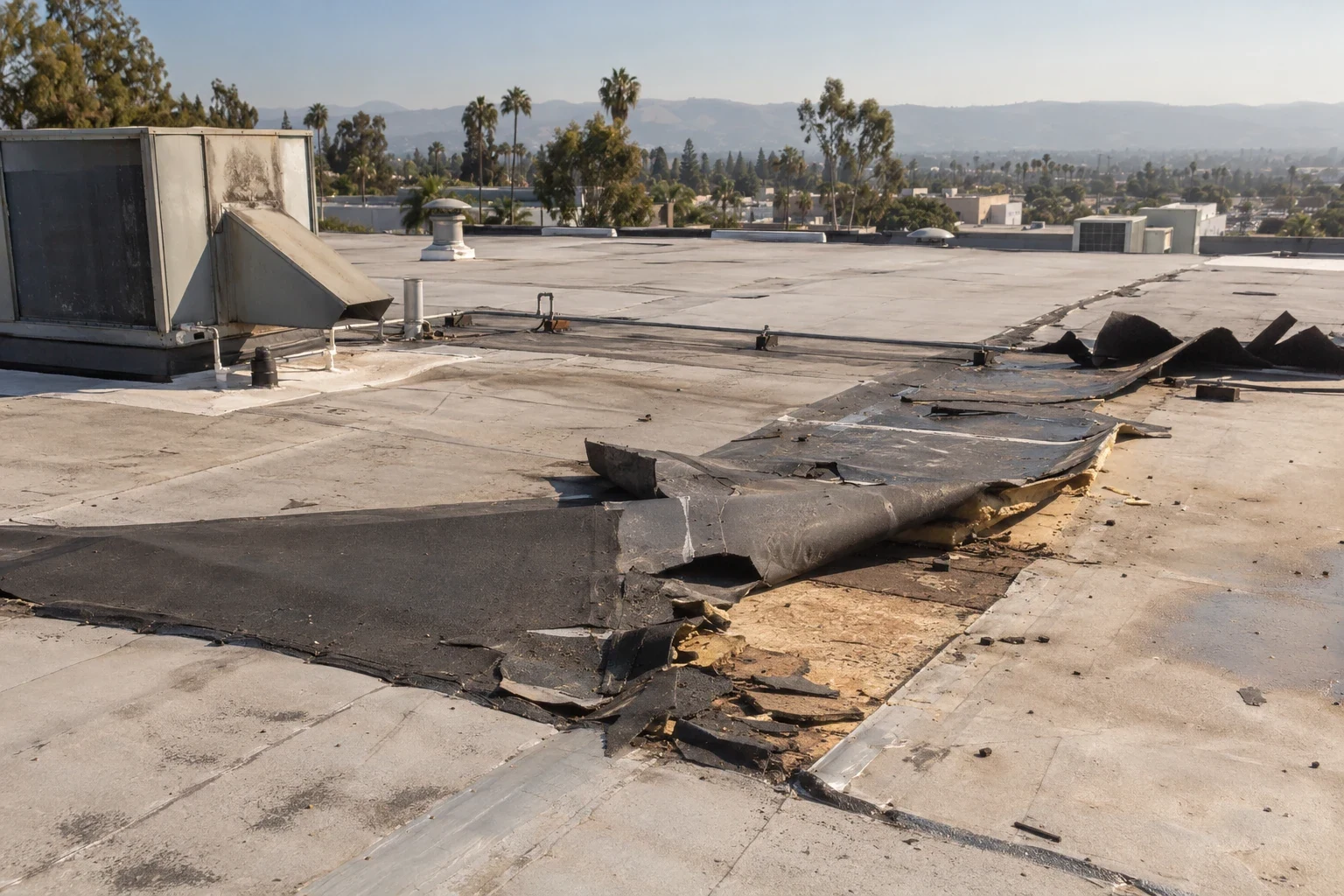
Record each observed condition and the evidence relevant to its cause. Some defects may predate the reported event or remain uncertain. Distinguish those findings in the report so repair needs can be evaluated without assigning unsupported causation.
Can permanent work begin during the first visit?
Assess the conditions, authorization and available compatible materials. A limited repair may be feasible, while another area needs design, investigation or improved access. Define temporary measures and follow-up for work that cannot yet be supported or carried out appropriately.
What information should the facility team preserve?
Keep dated leak reports, accessible photographs, equipment activity and earlier roof work records. Identify the source of reported information and avoid hazardous access to collect it. These records can guide examination and help explain the sequence without proving more than was observed.
Does a storm require replacing all insulation?
Determine concealed condition through an investigation suited to the assembly and decision. Samples establish conditions at their locations, and broader quantities need supporting evidence. Evaluate the repair or replacement scope alongside system requirements rather than using the weather event alone.
How is the completed repair checked?
Specify appropriate checks for the installed details and preserve their results. Coordinate any additional observation or authorized testing needed for unresolved entry questions. A dry interior immediately after work is useful information but does not independently establish the performance of every concealed connection.