Can existing coping be reused during reroofing?
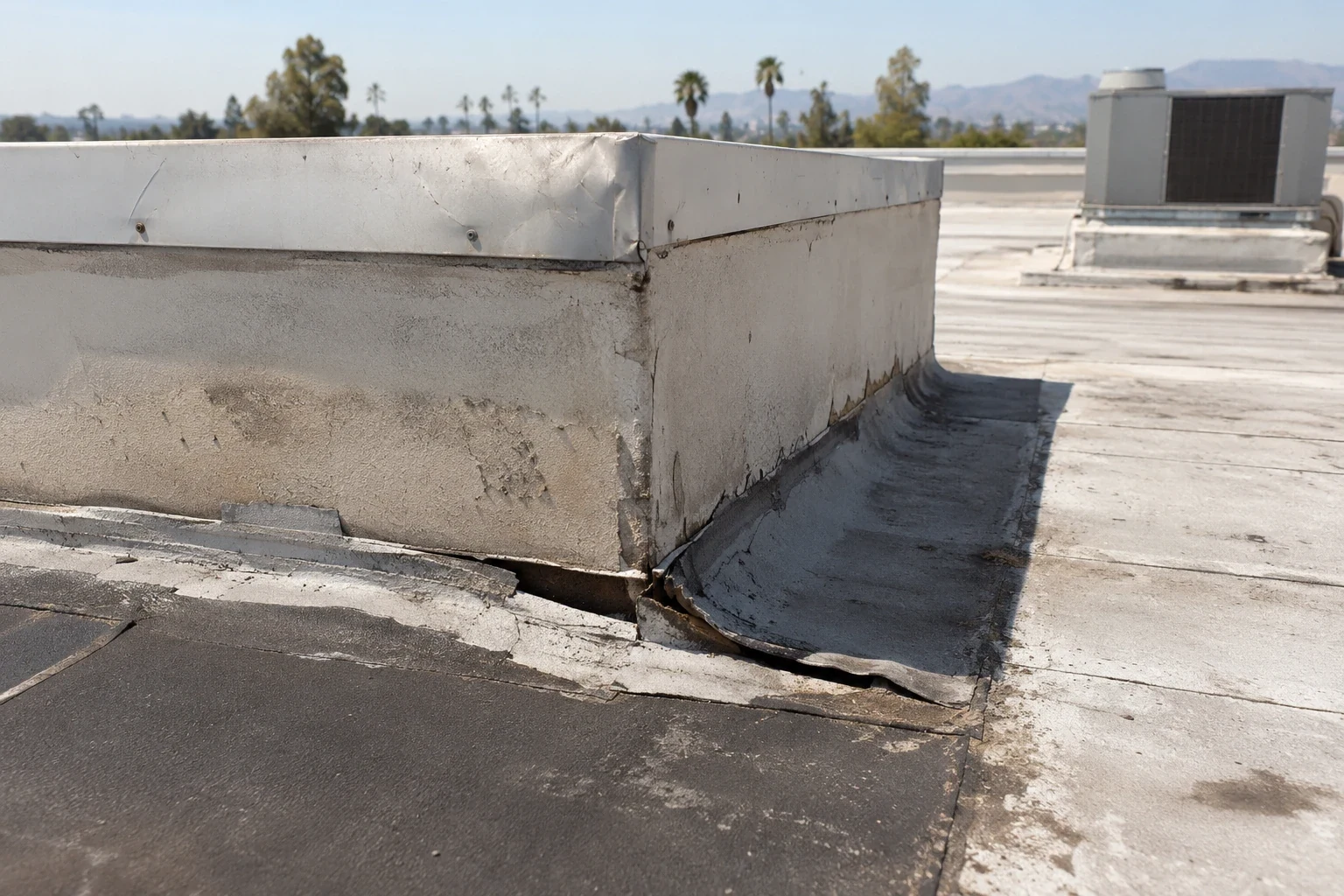
Evaluate its condition, dimensions and connection to the proposed assembly. New roof heights or flashing details may require changes even when the metal looks serviceable. Confirm the supported reuse detail and any required attachment review before including retention in the price.
Does loose metal prove a wind design problem?
Document the displacement and examine the relevant connections. Installation, substrate condition and other factors may affect the finding. The required design and appropriate repair need project-specific review rather than a conclusion based only on regional weather or one loose component.
What should happen before custom metal is ordered?
Reconcile field dimensions, wall conditions and the approved roof connection. Resolve special transitions and adjoining trade responsibilities. If concealed conditions remain unknown, define the investigation or allowance before fabrication commits the project to a profile that may not fit.
Are larger gutters always a better solution?
The drainage layout and discharge route need evaluation together. A larger gutter may leave slope, outlet or downstream restrictions unresolved. Develop the proposed change with suitable design information and coordinate the components affected by the alteration.
How are tenants informed about perimeter work?
Coordinate the work locations, access restrictions and schedule through the property’s responsible contact. Identify affected entrances, loading routes and protection measures in the site plan. Update that communication when weather or field findings change the agreed sequence.